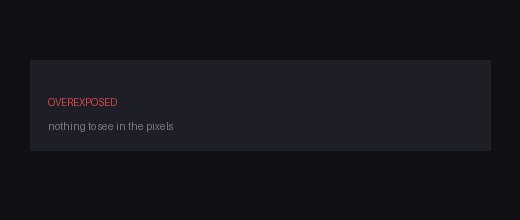
[cva@archvm overexposed]$ zsteg -a overexposed.png [?] 372 bytes of extra data after image end (IEND), offset = 0xbcd extradata:0 .. file: Zip archive data, at least v2.0 to extract, compression method=deflate 00000000: 50 4b 03 04 14 00 00 00 08 00 00 00 00 00 3e e7 |PK............>.| 00000010: 38 c1 9f 00 00 00 eb 00 00 00 0a 00 00 00 72 65 |8.............re| 00000020: 61 64 6d 65 2e 74 78 74 4d 8f bb 15 c2 30 0c 45 |adme.txtM....0.E| 00000030: 7b a6 78 1d 55 32 00 1d 03 d0 65 01 61 0b ac 83 |{.x.U2....e.a...| 00000040: 6d e5 d8 0a 09 db 23 02 05 a5 ee fb 48 9a 92 74 |m.....#.....H..t| 00000050: 50 0b 49 9e 7c ec 88 d2 38 98 b6 17 b2 74 eb d0 |P.I.|...8....t..| 00000060: ca b8 49 e6 11 53 e2 3f d5 43 55 0d e6 f0 17 1e |..I..S.?.CU.....| 00000070: 0f 17 2e 57 6e 1d 81 2a 78 f3 38 56 b1 a4 cb d7 |...Wn..*x.8V....| 00000080: 26 35 f2 06 8a 45 cc a4 de 3f ac 60 18 d0 98 e2 |&5...E...?.`....| 00000090: 6e 68 b4 22 6b a0 8c e4 c8 8b c6 c3 b9 46 d7 cb |nh."k........F..| 000000a0: de 8b 35 91 e1 a5 8b 2f 64 37 ea e3 d3 42 76 02 |..5..../d7...Bv.| 000000b0: 61 96 60 8b d3 40 ad 09 77 14 f5 c1 92 df 21 fe |a.`..@..w.....!.| 000000c0: c3 2c 1b 67 6f 7b 03 50 4b 03 04 14 00 00 00 08 |.,.go{.PK.......| 000000d0: 00 00 00 00 00 5e 1a 45 8e 09 00 00 00 07 00 00 |.....^.E........| 000000e0: 00 09 00 00 00 70 61 72 74 32 2e 74 78 74 33 4d |.....part2.txt3M| 000000f0: 36 33 48 35 b0 00 00 50 4b 03 04 14 00 00 00 08 |63H5...PK.......| meta part1 .. text: "06da61b" chunk:0:IHDR .. file: Adobe Photoshop Color swatch, version 0, 520 colors; 1st RGB space (0), w 0xdc, x 0x802, y 0, z 0; 2nd RGB space (0), w 0, x 0, y 0, z 0 b4,rgb,msb,xy .. file: Intel Itanium COFF object file, not stripped, 32 sections, symbol offset=0x20020020, 2097664 symbols, optional header size 8194, created Sun Jan 24 10:57:06 1971, 2nd section name "" b8,rgb,lsb,xy .. file: PEX Binary Archive
We got the part 1 of the flag.
And also, the output says, there is 372 bytes of extra data after IEND. (We can see the readme.txt and part2.txt in the zip contents here)
Let’s run binwalk to get the zip file.
1 2 3 4 5 6 7 8 9 10 11 12 13 14 15 16
[cva@archvm overexposed]$ binwalk -e overexposed.png [2026-09-29T17:32:45Z ERROR binwalk::extractors::common] Failed to execute command 7z["x", "-y", "-o.", "/home/cva/Downloads/overexposed/extractions/overexposed.png.extracted/BCD/zip_BCD.bin"]: No such file or directory (os error 2) [2026-09-29T17:32:45Z ERROR binwalk::extractors::common] Failed to spawn external extractor for'zip' signature: No such file or directory (os error 2)
/home/cva/Downloads/overexposed/extractions/overexposed.png ---------------------------------------------------------------------------------------------------------------------------------------------------------------------------------------------------------------------------------------------- DECIMAL HEXADECIMAL DESCRIPTION ---------------------------------------------------------------------------------------------------------------------------------------------------------------------------------------------------------------------------------------------- 0 0x0 PNG image, total size: 3021 bytes 3021 0xBCD ZIP archive, file count: 1, total size: 372 bytes ---------------------------------------------------------------------------------------------------------------------------------------------------------------------------------------------------------------------------------------------- [#] Extraction of png data at offset 0x0 declined [-] Extraction of zip data at offset 0xBCD failed! ----------------------------------------------------------------------------------------------------------------------------------------------------------------------------------------------------------------------------------------------
Analyzed 1 file for 85 file signatures (187 magic patterns) in 8.0 milliseconds
Binwalk locates the ZIP at 0xBCD but fails to extract because it can’t spawn 7z on this system. That’s fine, we know the offset. Carve it manually.
1 2 3 4 5 6 7 8 9
[cva@archvm overexposed]$ python3 - <<'EOF' data = open("overexposed.png","rb").read() i = data.find(b"PK\x03\x04") print("zip starts at", hex(i), "size", len(data)-i) open("payload.zip","wb").write(data[i:]) EOF zip starts at 0xbcd size 372 [cva@archvm overexposed]$ ls extractions overexposed.png payload.zip
The signature PK\x03\x04 marks the start of a ZIP local file header. We slice from there to end of file.
Let’s Check what we got in the zip.
1 2 3 4 5 6 7 8 9
[cva@archvm overexposed]$ unzip -l payload.zip Archive: payload.zip error [payload.zip]: missing 3021 bytes in zipfile (attempting to process anyway) Length Date Time Name --------- ---------- ----- ---- 235 1980-00-00 00:00 readme.txt --------- ------- 235 1 file
unzip complains that 3021 bytes are missing and lists only readme.txt. That mismatch is deliberate — something is hidden. (the part2.txt we have observed!)
Let’s unzip it.
1 2 3 4 5 6 7 8 9 10 11 12 13 14 15 16 17
[cva@archvm overexposed]$ unzip payload.zip
Archive:  payload.zip
error [payload.zip]:  missing 3021 bytes in zipfile
  (attempting to process anyway)
error: invalid zip file with overlapped components (possible zip bomb)
 To unzip the file anyway, rerun the command with UNZIP_DISABLE_ZIPBOMB_DETECTION=TRUE environmnent variable

[cva@archvm overexposed]$ UNZIP_DISABLE_ZIPBOMB_DETECTION=TRUE unzip payload.zip
Archive:  payload.zip
error [payload.zip]:  missing 3021 bytes in zipfile
  (attempting to process anyway)
  inflating: readme.txt

[cva@archvm overexposed]$ cat readme.txt
This archive's directory lists one file. The directory is not the archive.
Members can exist without the index admitting them -- read the raw local headers.
And remember what you are looking at: a picture carries more than its pixels.
The readme tells us exactly what’s going on. The central directory lists one file, but ZIP local headers can exist without being in the index, so we should read them ourselves.
So we walk every PK\x03\x04 header in the ZIP manually.
data = open("payload.zip","rb").read() i = 0 while True: j = data.find(b"PK\x03\x04", i) if j < 0: break # Local file header layout (30 bytes): # sig(4) ver(2) flags(2) method(2) mtime(2) mdate(2) # crc(4) csize(4) usize(4) namelen(2) extralen(2) (sig, ver, flags, method, mtime, mdate, crc, csize, usize, nlen, elen) = struct.unpack("<IHHHHHIIIHH", data[j:j+30]) name = data[j+30:j+30+nlen].decode() dstart = j + 30 + nlen + elen comp = data[dstart:dstart+csize] raw = zlib.decompress(comp, -15) if method == 8 else comp print(f"===== {name} (offset {hex(j)}) =====") print(raw.decode("utf-8","replace")) i = dstart + csize EOF ===== readme.txt (offset 0x0) ===== This archive's directory lists one file. The directory is not the archive. Members can exist without the index admitting them -- read the raw local headers. And remember what you are looking at: a picture carries more than its pixels. ===== part2.txt (offset 0xc7) ===== 5c60e08 ===== part3.txt (offset 0xf7) ===== 7c87c9
Each local file header is 30 bytes followed by the filename and the compressed data. The -15 in zlib.decompress means raw deflate, which is what ZIP uses. Three entries come out: readme.txt, part2.txt with 5c60e08, and part3.txt with 7c87c9. unzip never showed us those last two because they weren’t in the central directory.
We already got the part 1 using zsteg.
All three parts:
1
2
3
part1 = 06da61b
part2 = 5c60e08
part3 = 7c87c9
Concatenate them in the flag format:
1
H7CTF{06da61b5c60e087c87c9}
what we learned from this - a container’s index is not its contents. PNG viewers stop at IEND, and unzip trusts the central directory. Both hide data that’s still present in the raw bytes. Parsing the file formats directly is what exposes it.